
Intel RC28F128J3C-120: A Detailed Look at the 128-Megabit ETOX Flash Memory
The Intel RC28F128J3C-120 represents a significant milestone in the evolution of non-volatile memory technology. As a member of the renowned ETOX™ (EPROM Tunnel Oxide) VIII family, this 128-megabit (16-megabyte) flash memory chip encapsulated the cutting-edge of data storage for embedded systems at its introduction, offering a blend of density, performance, and reliability that was critical for a wide range of applications.
Architectural Foundation: The ETOX™ Cell
At the heart of this device lies Intel's proprietary ETOX™ cell technology. This architecture is renowned for its simplicity and endurance. Data is stored by trapping charge on a floating gate, electrically isolated by a high-quality tunnel oxide. This fundamental design provides excellent data retention, capable of maintaining information for decades. The cell's structure allows for efficient programming and erasure through the Fowler-Nordheim tunneling mechanism, which applies high voltages across the tunnel oxide to add or remove electrons from the floating gate.
Key Features and Specifications
The part number itself, RC28F128J3C-120, reveals its core characteristics. The ‘120’ suffix denotes a 120ns maximum access time, indicating its performance grade for read operations. Organized as 8,388,608 words by 16 bits (16M x 8 or 8M x 16), it offered designers flexibility in interfacing with both 8-bit and 16-bit microprocessors.
A critical feature of this device is its command-set compatibility with the JEDEC common flash interface (CFI). This standardization allows system software to automatically query the flash memory to determine its vendor, size, and electrical parameters, simplifying design-in and firmware portability across different flash vendors.
The chip operates from a single 3.3V power supply (VCC) for all read, program, and erase operations, making it suitable for low-power applications. However, it requires an elevated 12V VPP supply for the write (program/erase) functions. It offers a minimum of 100,000 program/erase cycles per sector, a critical metric for applications where data is frequently updated.
Block Architecture and Sector Protection
The memory array is divided into multiple 128-Kbyte blocks. This granular block structure is essential for modern firmware designs, allowing one section of code to be updated while another remains active. The device incorporates robust hardware and software data protection schemes. These include a lockout feature to prevent accidental program/erase cycles during power transitions and a dedicated `WP` (Write Protect) pin to hardware-lock the first or last two boot blocks, safeguarding critical BIOS or bootloader code from corruption.
Applications and Legacy
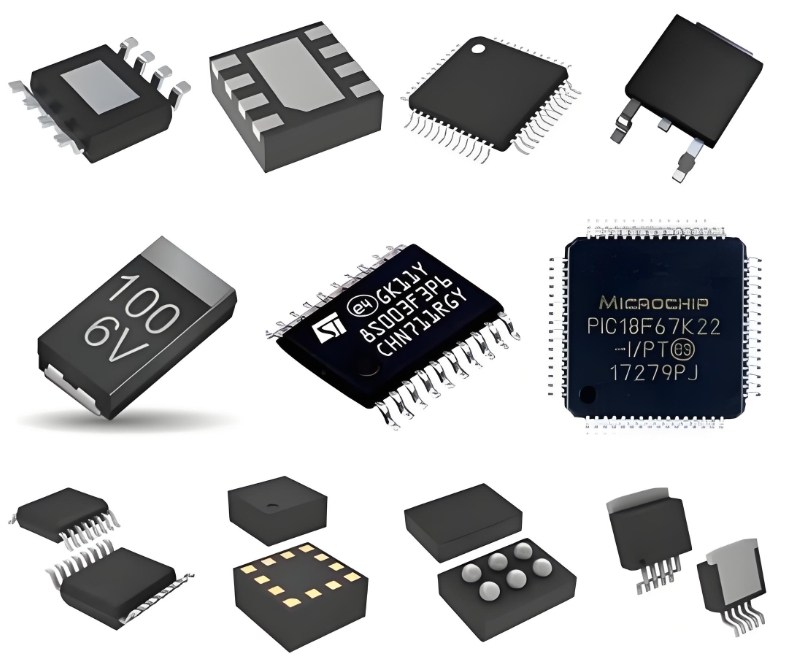
The Intel RC28F128J3C-120 was a workhorse component in late-1990s and early-2000s electronics. Its primary applications included:
Networking Equipment: Storing firmware and boot code in routers, switches, and hubs.
Telecommunications Systems: Holding complex operational code in base stations and other infrastructure.
Embedded Systems: Serving as the primary firmware storage in industrial control systems, automotive modules, and test equipment.
PC BIOS: Before the widespread adoption of SPI flash, chips like this were commonly used to store the system BIOS on motherboards.
The Intel RC28F128J3C-120 is a quintessential example of high-density parallel NOR flash from its era. It successfully combined Intel's robust ETOX™ technology with a standardized command set and flexible architecture, making it a reliable and versatile solution for demanding embedded systems. Its legacy lies in paving the way for the sophisticated non-volatile memory solutions that power today's devices.
Keywords:
1. ETOX Flash Memory
2. 128-Megabit
3. Non-Volatile Storage
4. Program/Erase Cycles
5. CFI (Common Flash Interface)

